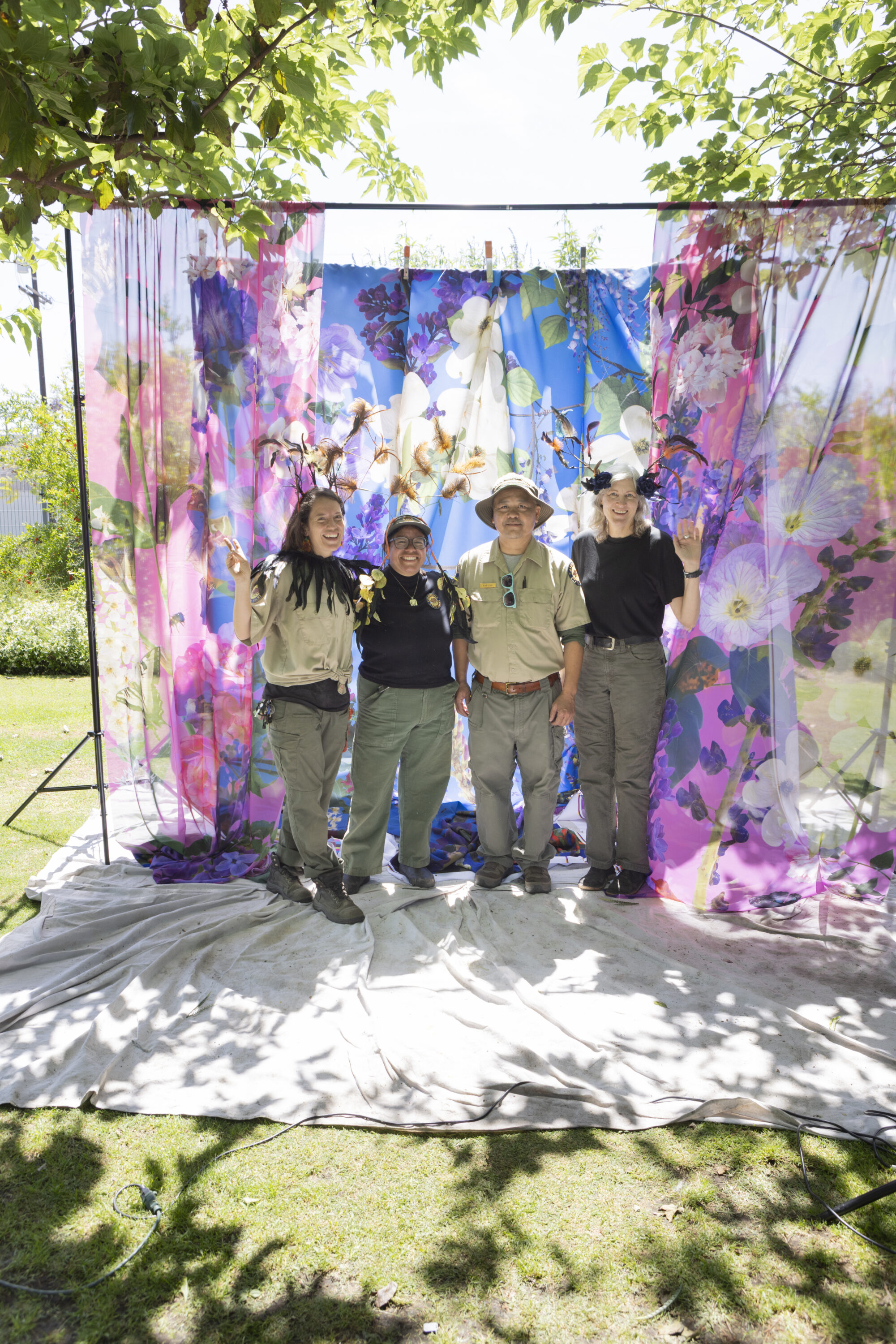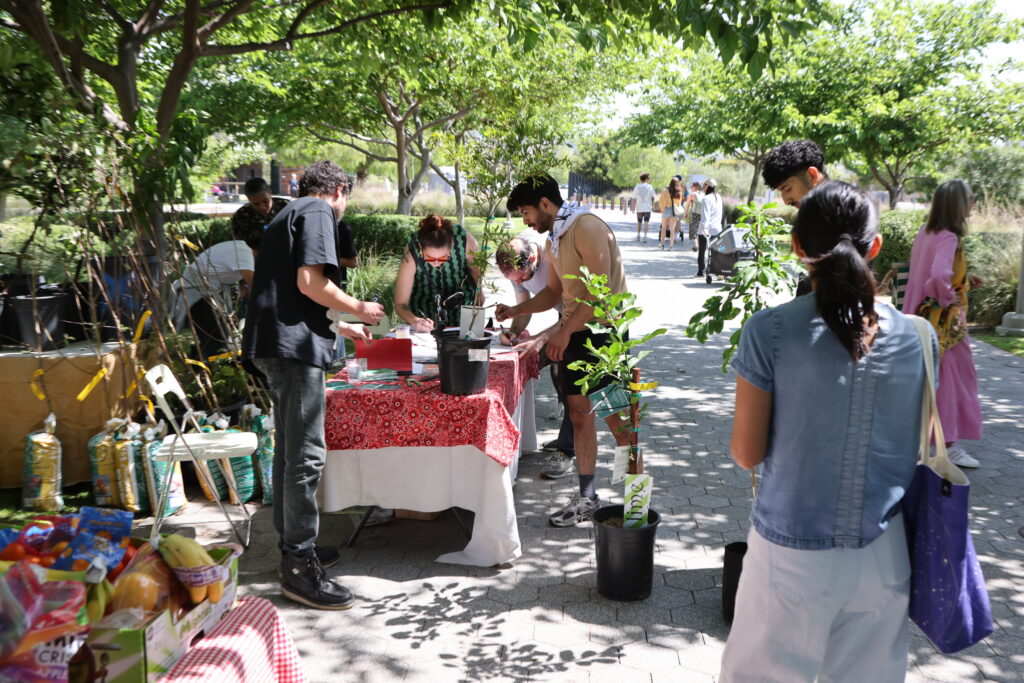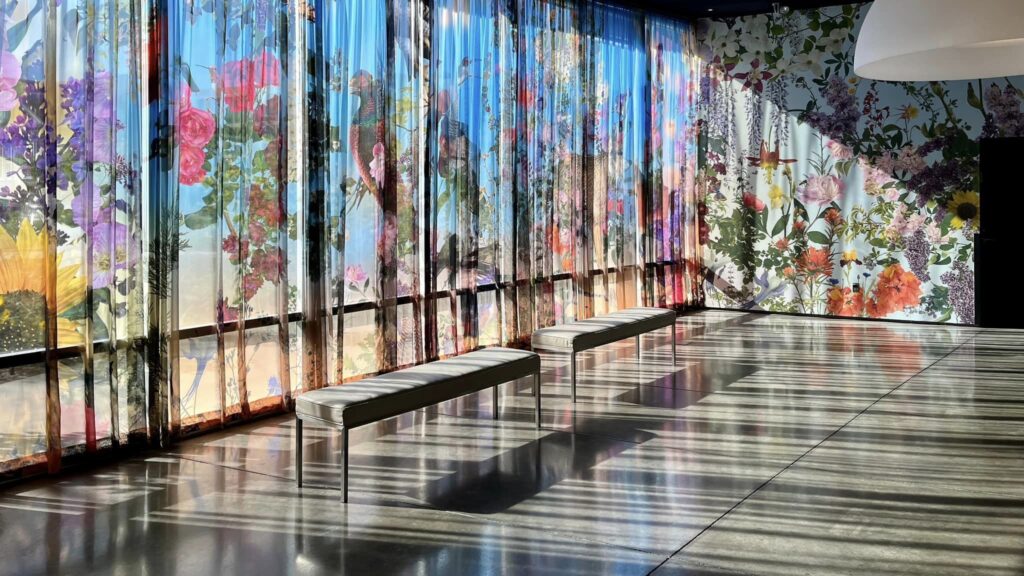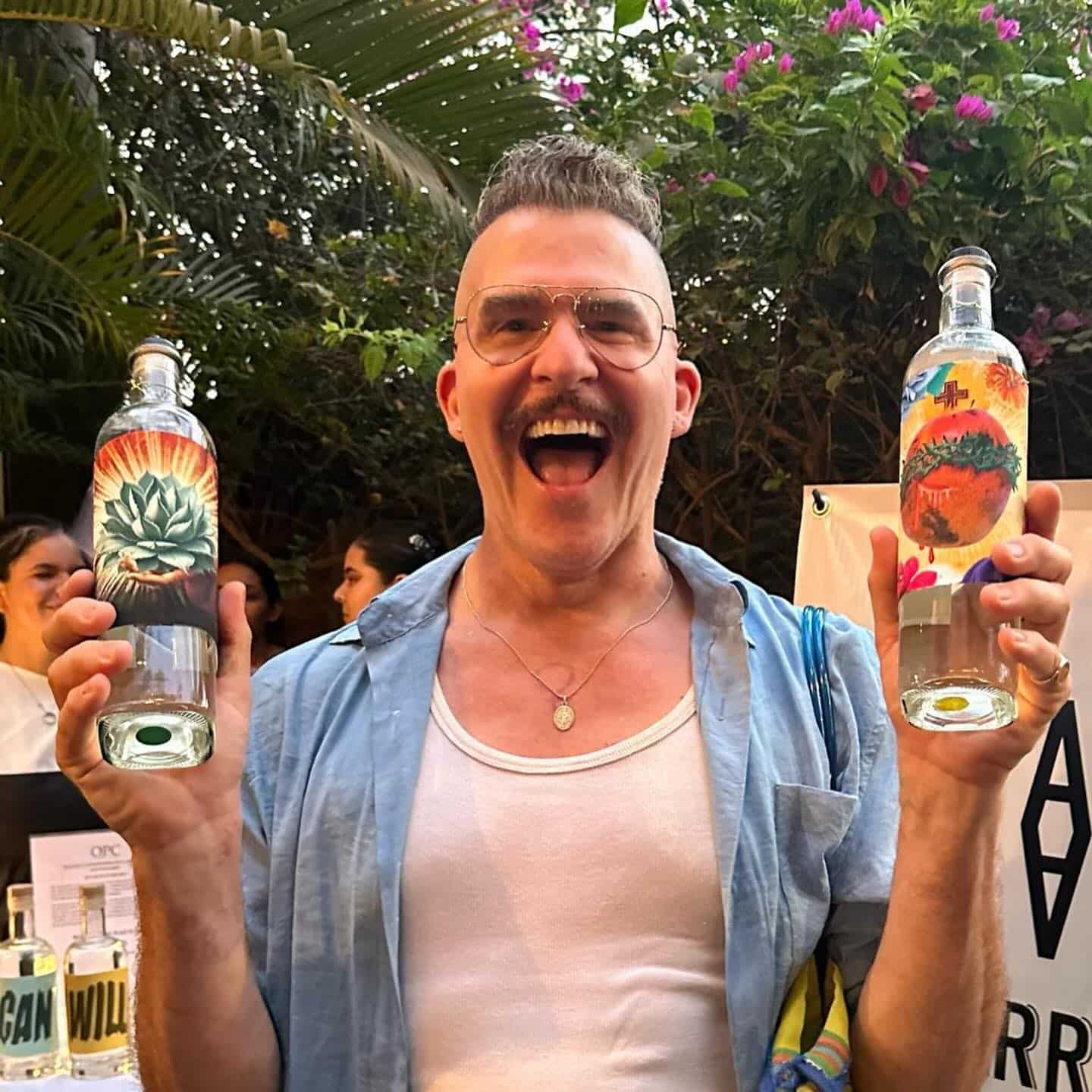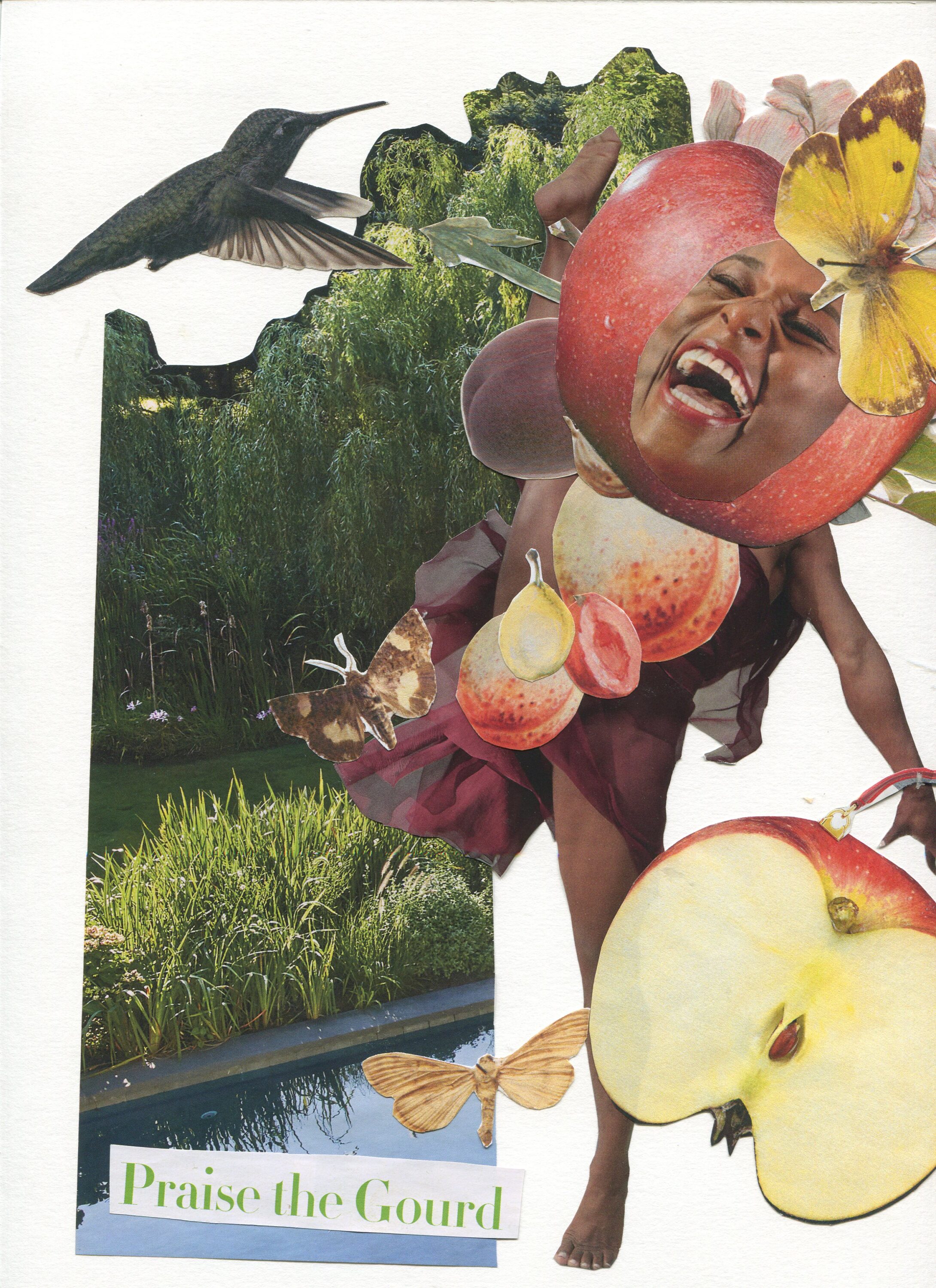
Join Fallen Fruit at the Smart Museum in Chicago on Sat May 5th for SYMPOSIUM: OF HOSPITALITY. We’ll be digging deep into the questions of radical hospitality during the day and in the evening we’ll debut the latest vintages of Neighborhood Infusions, vodkas with the essence of various neighborhoods infused inside them.
SYMPOSIUM: OF HOSPITALITY- Smart Museum Chicago
April 25th, 2012 | Posted in News | By: Fallen FruitPasadena Earth and Arts Festival -Public Fruit Jam
March 30th, 2012 | Posted in News | By: Fallen FruitApril 14, 2012
Pasadena Earth and Arts Festival
Fallen Fruit “Public Fruit Jam” ~ Bring home-grown or street-picked fruit to jam ~ 11am – 2 pm
Coleman Art Center-Gobble Gobble Cobbler
March 26th, 2012 | Posted in News | By: Fallen FruitPlease join us a the Coleman Center for the Arts (CCA) on Tuesday, April 3 at 6 PM for the event Gobble Gobble Cobbler with artists David Burns, Matias Viegener and Austin Young of the Fallen Fruit Collective. Residents are invited to bring a their own fruit cobblers and reflect on their childhood memories of fruit. The event will inspire sayings to be inscribed on an edition of picnic tables that will be installed around York and the CCA.
Using fruit as a lens the Fallen Fruit Collective investigates urban space, ideas of neighborhood, and new forms of located citizenship and community. The collective aims to reconfigure the relation between those who have resources and those who do not, to examine the nature of and in the city, and to investigate new, shared forms of land use and property.
This program is made possible by funding from the Andy Warhol Foundation for the Visual Arts, the Alabama State Council on the Arts, the National Endowment for the Arts, the Daniel Foundation of Alabama and the many contributions of our individual supporters. For more information please contact the Coleman Center for the Arts at 205-392-2005 or email colemancenter@gmail.com.
Del Aire Park Commission – a Public Fruit Park!
December 4th, 2011 | Posted in News | By: Fallen Fruit
Fallen Fruit has received an art commission from the LA County Arts Commission for Del Aire Park. We’ve met with the community group and we’re now in the design stage. We’re working on creating an installation that functions as a public fruit park.
Fallen Fruit Maps
July 5th, 2011 | Posted in News | By: Fallen FruitFind our maps here:Fallen Fruit Maps
Facebook – Fallen Fruit
July 5th, 2011 | Posted in News | By: Fallen FruitVisit us on our facebook fanpage- it’s a great place to interact with Fallen Fruit:
Fallen Fruit!
Fallen Fruit of Utah
July 5th, 2011 | Posted in News | By: Fallen FruitFallen Fruit of Utah brings together two types of collections through the common ground of fruit. One is sweeping – museums and historical archives – and the other is personal and intimate. Fruit is both deeply symbolic and simply decorative, both ordinary and special, sometimes at the same time. Eight historic collections and archives and over twenty families agreed to collaborate with Fallen Fruit to assemble works that range from spiritual and symbolic to representational landscapes to the commonplace (or everyday objects). This exhibition draws our attention to the meaning of fruit, a way to investigate symbolism, the aesthetics of deliciousness, and the bounty and goodness of the familiar.

The installation of this exhibition is part of our collaborative art practice. We love mixing serious oil paintings with decorative and everyday objects, and there are even pieces from local thrift stores. What links them all is the way fruit is represented, from the deeply symbolic to the simply decorative or even abstract. A selection of our videos are screened in this show, including one shot with teenagers in Salt Lake City. Several key walls in the exhibition are covered with our new wallpaper. It contains apple blossoms and little budding apples, shot in the spring in Utah and California. It’s an index of the real fruit in the real places it grows – the contrast between the photo-realism of the wall and the crafted quality of the art displayed on top of it creates a dialogue between the “real” and the symbolic.

Among the pieces we love best in the show are the various still lives, especially the number of watermelon pieces we’ve found. There are a great number of fruit trees and Mormon Trees of Life (which bear fruit, but of a more mystical kind, often depicted as points of light, floss, or multi-colored delights). In Utah we were especially captured by the number of fruit bowls or baskets, from wax to stone to beadwork. We like the ones that don’t even try to look like real fruit. We discovered the trove of lucite resin grapes that were part of Mormon Relief Society culture in the 1970s. They’re piled near the end of the exhibition, glowing luminously and unnaturally in the light. They’re an eye-catcher, a kind of bedazzlement that combines plastic with our luminous dreams.
PS, We’d like to thank all the institutions, individuals and families who helped us put this together, and especially Micol Hebron and all of the Salt Lake Art Center. We had a great time!

PUBLIC FRUIT THEATER at LACMA
April 26th, 2011 | Posted in News | By: Fallen FruitPublic Fruit Theater, Los Angeles
By Fallen Fruit (David Burns, Matias Viegener, Austin Young) in collaboration with La Loma Development (Marco Barrantes, Michelle Matthews).
November 7th 2010 June 30th 2011, daylight hours.
Corner of S. Fairfax Avenue and W. 6th Street, Los Angeles CA 90036

Come visit our Public Fruit Theater at LACMA! Sit in the theater and watch the fruit tree perform for you.
Sit long enough and you’ll see a whole cycle of growth, or create your own performance.
Fruit theater can be many things.

The Public Fruit Theater is at LACMA, the Los Angeles County Museum of Art, and is a collaboration between Fallen Fruit and La Loma Development. A circular amphitheater sunk into a lawn, you’ll find it near the corner of Fairfax and 6th street. It’s constructed of urbanite, reclaimed concrete sidewalks – an echo of the city around us. Much of Los Angeles was a citrus orchard before it became a city, concrete displacing trees with people in place of orange blossoms.

At the center of the amphitheater you’ll find a single orange tree, in memorial to the endless groves erased by time. We think of this as a different kind of theatrical site, one where the slow time of the natural growth cycle meets the fast time of urban life. Come sit with us, watch the tree, and watch ourselves as we gather around a symbol of vitality.

The Public Fruit Theater is a garden which features an amphitheater in the round constructed of reclaimed concrete sidewalks curving around a single citrus tree. Located on the corner of Fairfax Ave and W 6th St on the campus of the Los Angeles County Museum of Art, the piece comments upon the neighborhood’s history as a one-time site of extensive citrus groves. It is also a meditation on today’s prevalence of concrete and the lack of publically accessible or shared fruit trees. It is a nostalgic monument to the orange trees that covered much of Southern California’s landscape for decades and were an integral part of our economy, agricultural history, and identity.

As the last part of Fallen Fruit’s year-long residency at LACMA, the installation is a collaboration between the artists (David Burns, Matias Viegener, Austin Young) and La Loma Development (Marco Barrantes, Michelle Matthews). Bringing into focus our precarious and often domineering relationship to nature, the dry-stacked broken concrete is a reminder that the streets and sidewalks of our neighborhoods cover what were once orchards. La Loma Development often designs with broken concrete. Recycled concrete is perhaps the most local, sustainable, renewable resource at our disposal, says Marco Barrantes, though instead it often collects in landfill or piles up at recycling facilities. Instead, La Loma used different forms of recycled concrete for the retaining wall, the base, and for the drainage gravel.
Public Fruit Theater- looking toward 6th and Fairfax:

Rather than looking at fruit trees as simply a source of food, Public Fruit Theater highlights the tree as a durational performance. Viewers complete the story through observation, witnessing the tree’s leafing out, blooming, and ripening of its fruit. Fruit trees that exist in public space present us with a question of ownership. Whose fruit is this, and who is the public? People usually think of fruit and trees as static, but to the artists they are a kind of durational performance, one that unfolds over time according to the logic of the seasons: growth, dormancy, fruiting and ripening. The collaborators wanted to give the public a way to relate to this cycle over time.

photos of ‘Public Fruit Theater’ by Fallen Fruit, 2011
EATLACMA.org
LACMA.org
lalomadevelopment.com
FALLEN FRUIT OF UTAH- OPEN CALL: LEND US YOUR FRUIT OBJECTS!
April 16th, 2011 | Posted in News | By: Fallen FruitOPEN CALL:
LEND US YOUR FRUIT OBJECTS!

FALLEN FRUIT OF UTAH
June 11 – September 1, 2011
Salt Lake Art Center
www.slartcenter.org
Objects must be submitted by May 9 at noon and received by May 15, 2011
As part of our upcoming exhibition on the history of fruit in Utah, we are looking to include objects of art and everyday objects that represent fruit in some way. This may include aprons, or family pictures of picking fruit or jars of home-made jam from last summer. We are interested in creating a collection of objects that tell the story of fruit in Utah families – both current and throughout history. The pieces we assemble will be shown at Salt Lake Art Center from June 11th, 2011 to September 01, 2011. Please consider your family as a valuable representative of Utah and the spirit of the pioneers!
The materials loaned for this exhibition will be compiled and displayed by the three artists known as Fallen Fruit: David Burns, Matias Viegener and Austin Young. Fallen Fruit has collaborated on fruit and art-related projects around the world for more than 7 years. This is their first exhibition in Utah.
Things we are interested in finding
We are interested in everyday objects, drawings, paintings, photographs or mementos that tell a story about your family and it must relate to fruit in one way or another (regardless of how abstract). Maybe your grandfather has a collection of fruit trees? Are there special dishes that have fruit painted on them? Or heirloom furniture with carved fruit ornamentation? Or earrings, or jewelry? Waxed fruit, paintings- old or new, personal or collected art, handwritten or typed recipes from your great aunt. Was canning or jamming central to your family? Maybe there is an orchard close by? Maybe your aunt or uncle photographed landscapes and some of those pictures are of fruit trees? We are interested in all kinds of fruit-related objects for this exhibition!
How to get involved
Please submit jpg photographs of your family fruit relics by email to fallenfruit@SLartcenter.org with a brief description of the object and its meaning. The submission materials may be recent or historic however, they must be able to be hand-delivered or sent by USPS or UPS to Salt Lake City by May 15th 2011. Please include your contact name, email, and preferred phone number. There is no limit to the jpg’s you may submit, and all pieces included in the exhibition will be insured by the Salt Lake Art Center, and returned to you at the conclusion of the exhibition.
Fallen Fruit of Utah
Fruit trees were planted across the plains of the western United States as a means of sustenance and survival. In 1847, Brigham Young traveled west to Salt Lake City bringing with the pioneers not only personal and familiar artifacts and tools, but fruit trees for planting. We’re interested in what these trees symbolize “the desire for self-sufficiency, not depending on others or outsiders, but also the desire for an earthly paradise” blooming in this case in the desert.
We are excited about the possibility of reorganizing the “Fruit of Utah” into one large exhibition for the summer of 2011 at the Salt Lake Art Center. The Fallen Fruit of Utah draws from the permanent collections of the LDS museum, the Daughters of the Utah Pioneer Museum and The Fairview Museum to name a few. The concept behind this project is bring a selection of historic depictions of fruit in the state of Utah into one place in Salt Lake City. Whether in form of handicrafts, everyday objects or fine art, we hope these objects will speak for themselves to some degree, creating a dialogue on the meaning of fruit to the pioneers and to those who followed.


The objects will evoke the symbolic and practical significance of fruit. Some will be handmade and familiar, others are masterfully painted or sketched. The exhibition creates a different kind of history of the pioneer and the expansion westwards across North America. We’re interested in ideas of place (“this is the place”) and of destiny, making what seems empty full. Our ancestors not only brought hope, but also aspirations, objects of art, family history and of course fruit!
Public Fruit Theater- almost ready for public view!
November 17th, 2010 | Posted in News | By: Fallen FruitWe are happy to announce that Public Fruit Theater is almost ready for public view!
Situated on the northwest corner of LACMA’s new park grounds, Public Fruit Theater
is near where old citrus groves once formed the Los Angeles landscape.
Public Fruit Theater is a piece we conceived of years ago, and we are so excited that it’s going
to be one of the cornerstones of LACMA’s new landscape.

In this incarnation of Public Fruit Theater, Marco Barrantes and Michelle Matthews of La Loma Development Company, pioneers in green building and the use of “Urbanite,” designed, engineered and constructed the amphitheater which surrounds one orange tree.
Find more info about La Loma on their website:
www.lalomadevelopment.com
Find out more about ‘Urbanite’: Sustainablog:The Recycled, Post-Industrial Green Building Material: Urbanite
The new area of the LACMA grounds behind ‘LACMA WEST,’ are being planted now and will be a beautiful park open to the public – we think an opening party will be in order soon!
Public Fruit Theater, Los Angeles, 2010
By Fallen Fruit (David Burns, Matias Viegener, Austin Young) in collaboration with La Loma Development (Marco Barrantes, Michelle Mathews).
This garden is a nostalgic monument to the orange trees that covered much of Southern California’s landscape for decades and were an integral part of our economy, agricultural history, and identity. It also brings into focus our precarious and often domineering relationship to nature. The dry-stacked broken concrete is a reminder that the streets and sidewalks of our neighborhoods cover what were once orchards.
Rather than looking at fruit trees as simply a source of food, Public Fruit Theater upholds the tree as a durational performance. Viewers complete the story through observation, witnessing the tree’s leafing out, blooming, and ripening of its fruit. Fruit trees that exist in public space present us with a question of ownership. Whose fruit is this, and who is the public? If the tree offers us fruit, what do we offer it? Where does the theater begin and the performance end?

Orange and Fairfax at LACMA. just near the site of Public Fruit Theater.
EATLACMA.org
LACMA.org
www.lalomadevelopment.com
EATLACMA was organized by the Los Angeles County Museum of Art and made possible by a Museum and Community Connections Grant from MetLife Foundation.
Additional support was provided by the Ralph M. Parsons Fund and Paramount Citrus.